Vietnam Association of Diabetes and Endocrinology – VADE Vietnam Association of Diabetes and Endocrinology – VADE
Chau My Chi, MD, PhD
1. Definition: What is dangerous hyperglycemia?
Dangerous hyperglycemia occurs when blood sugar levels exceed safe limits. This condition becomes dangerous when blood sugar rises excessively high (usually over 14 mmol/L or 250 mg/dL) accompanied by signs of severe toxicity or dehydration in the body.
If not treated promptly, the patient may fall into a coma or even die.
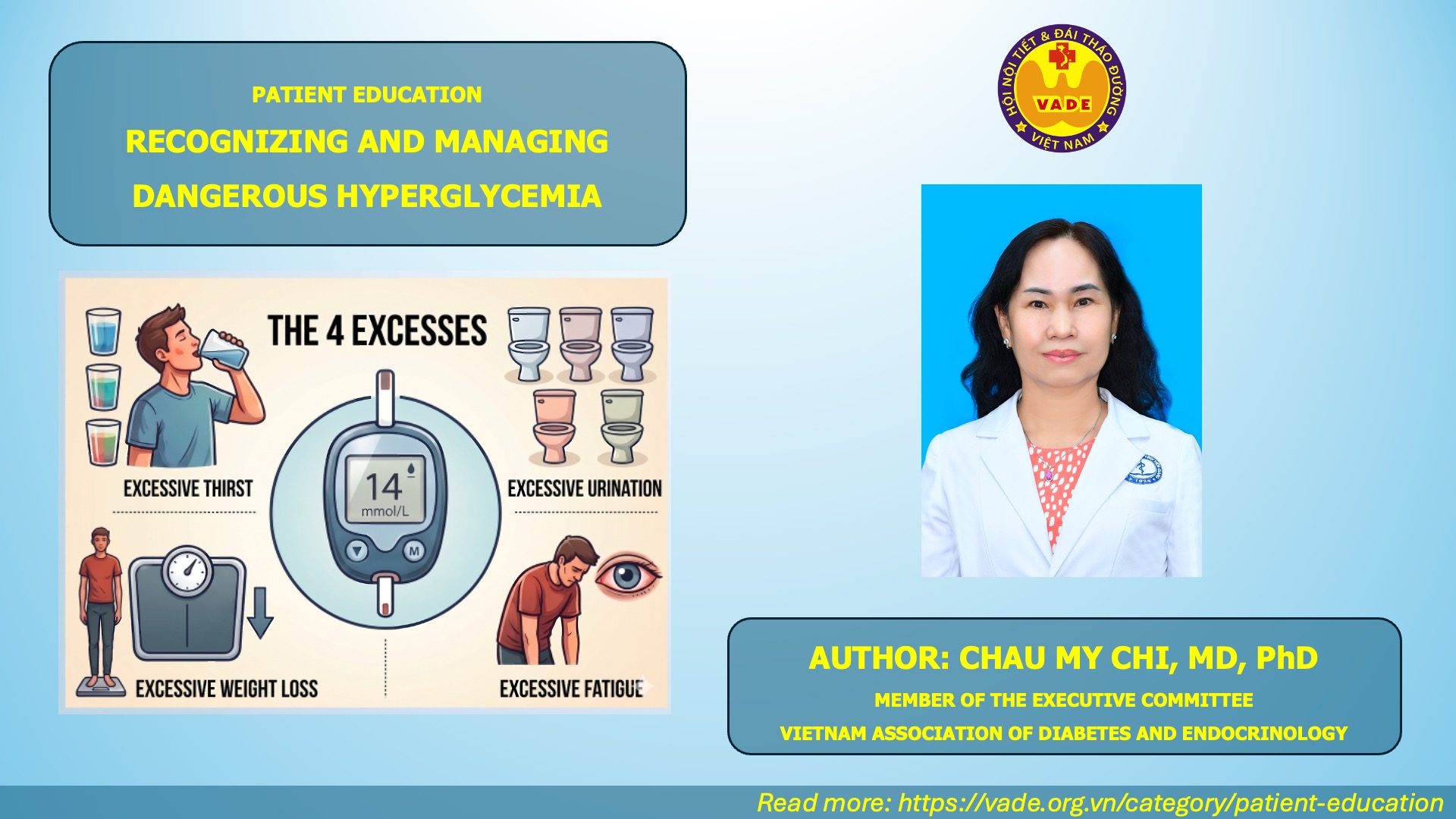
2. How to recognize: The “4 EXCESSES” rule and “EMERGENCY SIGNS“
To easily remember, observe the following symptoms:
Early recognition (4 EXCESSES):
- Excessive thirst: Drinking water constantly but still feeling a dry throat.
- Frequent urination: Urinating very often, especially at night.
- Excessive weight loss: Losing weight quickly despite eating normally.
- Excessive fatigue: Lethargic body, blurred vision, weak limbs.
EMERGENCY Signs (Need to go to the hospital immediately):
- Unusual breath odor: Smell of ripe fruit or nail polish (acetone).
- Digestive disorders: Abdominal pain, nausea, or vomiting.
- Cognitive disturbances: Drowsiness, confusion, delirium, or seizures.
- Rapid and deep breathing: Feeling short of breath even without strenuous activity.
3. Why is it dangerous? (Risks)
When blood sugar is too high, the body will experience acute complications:
- Severe dehydration: Leading to cardiovascular collapse.
- Diabetic Ketoacidosis (DKA): The blood becomes acidic due to burning fat instead of sugar.
- Hyperosmolar Hyperglycemic State (HHS): Common in older adults, with a very high mortality rate.
4. How to handle: The “3 DOs” rule
When detecting a patient with signs of hyperglycemia, do the following immediately:
Step 1: Quick check
- Use a personal blood glucose meter (if available).
- If the result is > 14 mmol/L (250 mg/dL), high alertness is required.
Step 2: Rehydrate and use medication
- Drink plenty of filtered water: Helps the kidneys excrete excess sugar through urine (do not drink sugary drinks or fruit juices).
- Use prescribed medication: Take medication or inject Insulin at the exact dose prescribed by the doctor. Absolutely do not excessively increase the dose without guidance.
Step 3: Contact medical help
- If blood sugar does not decrease after 2 hours or if there are “Red flag signs” (vomiting, rapid breathing, drowsiness), call emergency services (115 in Vietnam) or take the patient to the nearest medical facility.
5. Preventive advice
- Eat right: Limit carbohydrates and sweets.
- Exercise right: Gentle physical activity for 30 minutes a day.
- Measure right: Check blood sugar regularly according to the doctor’s appointment.
References:
- Guidelines of the Vietnam Ministry of Health
- Decision 3280/QD-BYT (2020): “Guidelines for diagnosis and treatment of type 2 diabetes”.
- Decision 5481/QD-BYT (2023): Latest update on the management and treatment of diabetes.
- American Diabetes Association (ADA): Standards of Care in Diabetes (Updated 2024 – 2026)