vade

“Sick day rules” – Managing diabetes on sick days
Nguyen Thi Thuy Hang, MD, PhD When having a fever, flu, infection, vomiting, diarrhea, or poor appetite, blood sugar levels can rise or fall abnormally. Therefore, even when sick, patients still need to monitor and manage their diabetes. 1. Patients need to remember 5 main things What to do How …

Read more

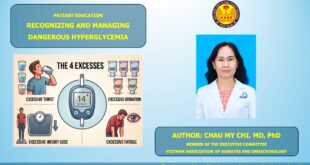
Recognizing and managing dangerous hyperglycemia

Chau My Chi, MD, PhD 1. Definition: What is dangerous hyperglycemia? Dangerous hyperglycemia occurs when blood sugar levels exceed safe limits. This condition becomes dangerous when blood sugar rises excessively high (usually over 14 mmol/L or 250 mg/dL) accompanied by signs of severe toxicity or dehydration in the body. If …

Read more

Regular eye examinations for patients with diabetes

BUI PHUONG THAO, MD, Specialist level II 1. Definition and warning signs of diabetic retinopathy Diabetic retinopathy (DR) is a complication of diabetes where the blood vessels of the retina are damaged, which can cause bleeding, plasma leakage, and the development of new blood vessels, forming fibrous scar tissue that …

Read more

Psychology – stress – depression in diabetic patients

Nguyen Hoang Vu, MD, MSc Diabetes mellitus (DM) not only affects physical health but also profoundly impacts the behavior, psychology, and emotions of patients. The daily requirement to monitor blood glucose, follow a strict diet, exercise regularly, and take lifelong medication causes many people to feel pressured, anxious, and even …

Read more

10 essential facts for a correct understanding of diabetes

Prof. Dr. Thai Hong Quang Former Director of Military Hospital 103 – Former President of the Vietnam Association of Diabetes and Endocrinology   1. WHAT IS DIABETES MELLITUS? Diabetes mellitus (DM) is a chronic disease involving multiple factors in its pathogenesis. Beyond glycemic control, it requires continuous medical care through …

Read more

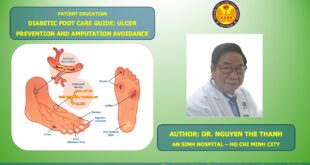
Diabetic foot care guide: Ulcer prevention and amputation avoidance

Dr. Nguyen The Thanh An Sinh Hospital, Ho Chi Minh City   1. Definition (How to Recognize) A diabetic foot is a condition involving foot damage caused by Diabetes. Patients may experience: – Numbness or loss of sensation in the feet. – Dry, cracked skin that is easily scratched. – …

Read more

Optimal timing for safe and effective physical activity

Assoc. Prof. Dr. Tran Thua Nguyen 1. Definitions: Exercise is a planned physical activity (walking, jogging, cycling, tai chi, etc.) that helps improve health and control blood glucose levels in people with diabetes. Exercise Timing refers to the specific time of day a patient chooses to work out (before meals, …

Read more

Glycemic Index

ASSOC. PROF. DR. TRAN THI THANH HOA DEFINITION: The Glycemic Index (GI) is a measure of a food’s ability to raise blood sugar after consumption compared to a reference food (such as white bread or glucose). Benefits of GI: Balancing blood sugar levels after meals: many studies demonstrate that following …

Read more

Non-diabetic medications causing hyperglycemia or hypoglycemia

Assoc. Prof. Dr. Hoang Trung Vinh – Vietnam Military Medical Academy Medications that may induce hyperglycemia No. Drug Class/Name Mechanism/Impact Measures to mitigate hyperglycemic effects 1 Corticosteroids – Prednisolone – Dexamethasone – Methylprednisolone – Increase hepatic gluconeogenesis – Decrease insulin sensitivity – Primarily increase postprandial glucose – Use the lowest …

Read more

Diet and religion in patients with diabetes

Assoc. Prof. Dr. Nguyen Khoa Dieu Van In life, everyone has their own faith and religion, and patients with diabetes (DM) are no exception. Eating is not just about nutrition but is also tied to religious beliefs, family traditions, and spiritual life. Patients with DM can fully practice their faith, …

Read more