Vietnam Association of Diabetes and Endocrinology – VADE Vietnam Association of Diabetes and Endocrinology – VADE
ASSOC. PROF. DR. TRAN THI THANH HOA
DEFINITION: The Glycemic Index (GI) is a measure of a food’s ability to raise blood sugar after consumption compared to a reference food (such as white bread or glucose).
Benefits of GI: Balancing blood sugar levels after meals: many studies demonstrate that following a low-GI diet can reduce blood sugar levels and control blood glucose (BG) in people with type 2 diabetes. Helps with weight loss and reduces blood cholesterol: a low-GI diet helps lower total cholesterol and LDL (bad) cholesterol levels, both of which are risk factors for cardiovascular disease.
Diabetes mellitus (DM) is one of the most common diseases today. With the number of people affected increasing significantly and a trend towards younger ages, DM has been and is posing a major challenge in management and treatment. In addition to medication and exercise, diet is one of the foundational factors in controlling BG. In particular, the GI of food is a factor that people with diabetes need to consider in their daily diet to maintain stable BG levels.
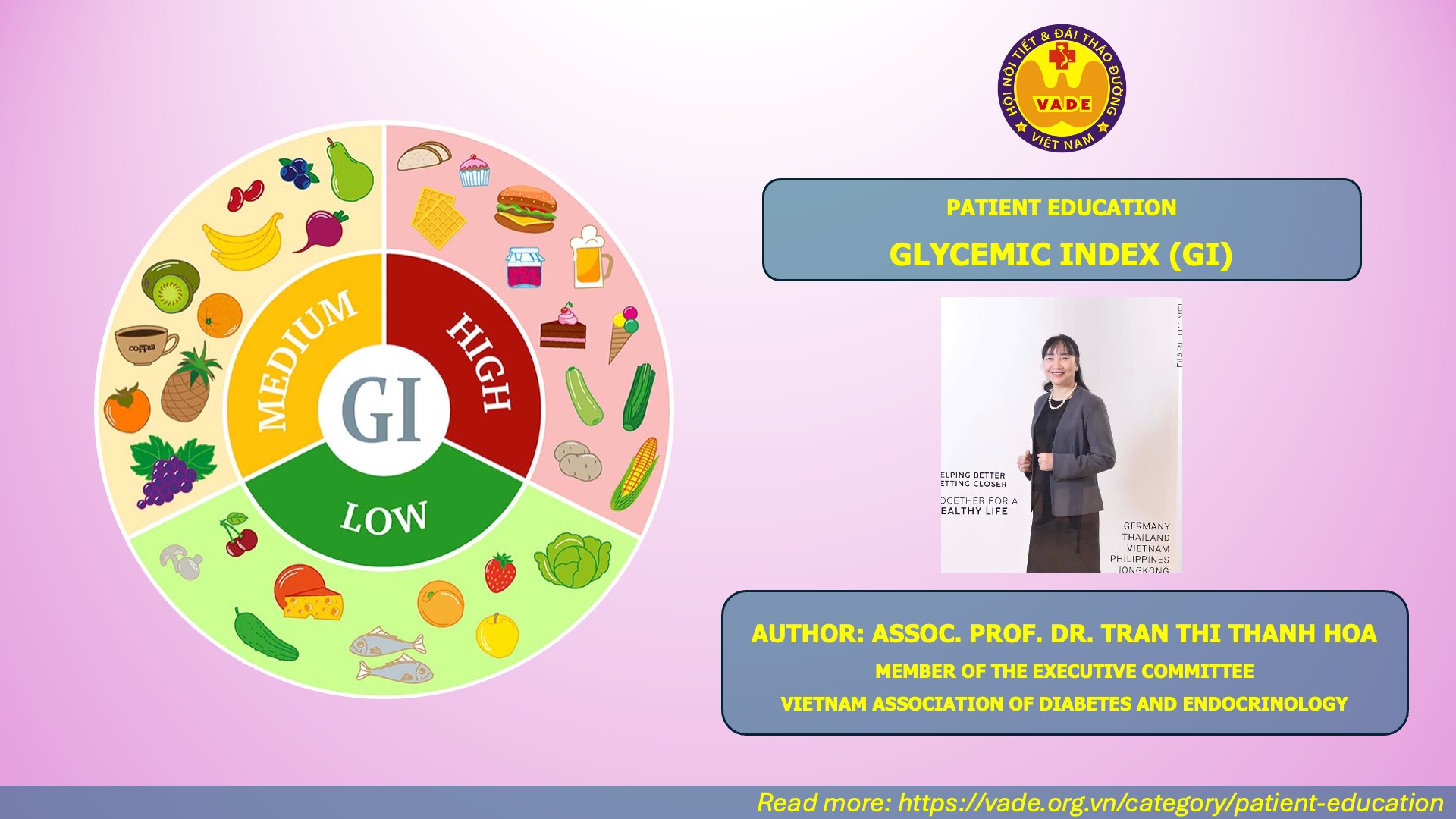
What is the GI index in food? GI is an important parameter to note when choosing food, especially for people with DM. This index indicates the blood sugar-raising potential of a food after eating, based on a scale from 0 to 100. According to experts, the GI index is divided into 3 levels:
- Low GI foods: From 0 – 55
- Medium GI foods: From 56 – 69
- High GI foods: From 70 or above
Specifically, carbohydrates from low-GI foods are digested and absorbed more slowly, thereby helping to control BG more effectively than high-GI foods. Understanding the GI index in food will help patients choose more suitable foods to maintain health and effectively manage diabetes.
What are the benefits of using low-GI foods in the daily diet for people with diabetes?
The Glycemic Index (GI) of food directly affects postprandial BG levels. For people with DM, controlling BG (accurately reflected through the HbA1c index) is the key factor in preventing serious complications such as cardiovascular disease, amputation, kidney failure, and eye damage. A large-scale study by British scientists showed that a 1% reduction in HbA1c is closely linked to a reduction in the risk of diabetic complications.
| Starch Group | Dairy Group | Vegetable Group | Fruit Group | |
| Low GI (GI≤55) |
Whole grain bread, Fresh rice vermicelli, Rice noodles (Phở) | Whole fresh cow’s milk, Soy milk, Yogurt | Carrots, Boiled taro, Boiled cassava, Boiled sweet corn, Peanuts, Red beans | Grapefruit, Oranges, Apples, Pears |
| Medium GI (GI 56 – 69) |
Brown rice, Baguette, Pasta | Vanilla/chocolate ice cream | French fries, Boiled sweet potato, Boiled pumpkin | Pineapple, Lychee, Ripe papaya, Ripe mango |
| High GI (GI ≥ 70) |
White rice, Sticky rice, White bread | Mashed potatoes, Boiled potatoes | Watermelon, Canned lychees |
Low-GI food group ≤ 55:
The food group with a low Glycemic Index (GI) ≤ 55 includes fruits, green vegetables, whole grains, etc. This is the group of foods that helps control BG and is recommended for people with diabetes.
Starch group:
The GI of raw oatmeal = 55, whole grain bread GI = 53, fresh rice vermicelli GI = 51.2, and rice noodles (phở) GI = 40.
Dairy group: The average GI of dairy products is around 30, such as whole fresh cow’s milk with a GI = 34 and soy milk with a GI = 34. Additionally, you can add yogurt to your daily menu as it has a GI = 36.
Vegetable group: You can use fresh carrots (peeled, cooked) as this vegetable has a GI = 33, or lesser yam (boiled) with a GI = 37, and red beans with a GI = 24.
Fruit group: Generally, the GI of fructose in fruit is around 20. Some fruits will have a slightly higher GI but are still within the safe range for use, such as grapefruit (GI = 25), apples (GI = 38), oranges (GI = 42), tangerines (GI = 19), fresh grapes (GI = 46), and pears (GI = 38).
Medium-GI food group from 56 – 69:
Recommended for moderate consumption.
Starch group: The GI of cooked brown rice (rice:water ratio = 1:1) is GI = 58, plain brown rice GI = 68, instant rice porridge GI = 66, baguette GI = 57, and Spaghetti (boiled for 20 minutes) GI = 64.
Dairy group: Processed dairy products like vanilla/chocolate ice cream have a GI = 58.
Vegetable group: You can use these vegetables in moderation, including fried potatoes (GI = 63), boiled sweet potatoes (GI = 63), and boiled pumpkin (GI = 64).
Fruit group: Fruits with a medium GI that you can use moderately include pineapple (GI = 59), lychee (GI = 57), ripe papaya (GI = 56), and ripe cherries (GI = 63).
High-GI food group ≥ 70:
These foods increase blood glucose concentrations very quickly, such as certain carbohydrates (carbs) like potatoes, biscuits, white bread, and refined sugar.
Starch group: Familiar dishes with very high GI scores that you should consider carefully before using include broken rice (GI = 86), white rice (GI = 73), sticky rice (GI = 94), premium glutinous rice (GI = 75), rice porridge (GI = 78), instant oatmeal (GI = 79), white bread (GI = 75), whole wheat bread (GI = 74), and fresh noodles (blanched in boiling water) (GI = 82).
Dairy group: Most foods in the dairy group have a low to medium GI that you can use.
Vegetable group: Mashed potatoes (GI = 87), boiled potatoes (GI = 78).
Fruit group: Some fruits have a high GI, such as watermelon (GI = 76) and canned lychees (GI = 79).
The Glycemic Index of food will also change due to factors such as:
- The GI of food will increase when it is finely milled, pureed, or overcooked.
- The GI of lightly cooked food is lower than when it is fried or grilled.
- Fiber-rich foods are digested slowly, therefore resulting in a lower GI.
In addition to paying attention to the GI in food, people with DM must also ensure a balanced nutritional diet, such as not consuming too many fats and calories, which can lead to weight gain and increase the risk of cardiovascular disease. According to experts, prioritize choosing foods low in saturated fat, salt, and sugar. Don’t forget to increase the intake of healthy food groups like fruits, vegetables, whole grains, legumes, and fatty fish in your daily meals to support better health. Choosing low-GI foods is one of the effective ways to manage DM, thereby improving the health of people with DM. However, many people with DM find it difficult to coordinate and calculate the GI of foods in every meal. Therefore, besides common foods like low-GI vegetables and fruits, you should consider using specialized nutritional products for people with diabetes to provide complete, balanced nutrition with a low GI.
Using low-GI foods in the daily diet plays a vital role in BG control and diabetes management because these foods help patients maintain stable BG, thereby minimizing the risk of complications and enhancing health.
References:
- Glycemic index and diabetes. https://medlineplus.gov/ency/patientinstructions/000941.htm
- Nutrition for people with diabetes: https://bvndgiadinh.org.vn/?p=4204
- Glycemic index and glycemic load of food: https://viendinhduongtphcm.org/Media/Tai_lieu_chuyen_mon/Dinh_duong_noi_khoa /GI_GL.pdf
- Table A1. Glycemic index (GI) and glycemic load (GL) values determined in subjects with normal glucose tolerance: 2008. https://ada.silverchair-cdn.com/ada/content_public/journal/care/31/12/10.2337_dc08- 1239/4/dc081239-sup-tablea1_1.pdf
- Tran Quoc Cuong, Ta Thi Lan, Tran Bich Van, Nguyen thi Anh Van et al. Determination of glycemic index of some Vietnamese foods. Nutrition and Food 2012; 8 (3): 6-13.
- The University of SYDNEY. Glycemic Index Research and GI News.https://glycemicindex.com/