Vietnam Association of Diabetes and Endocrinology – VADE Vietnam Association of Diabetes and Endocrinology – VADE
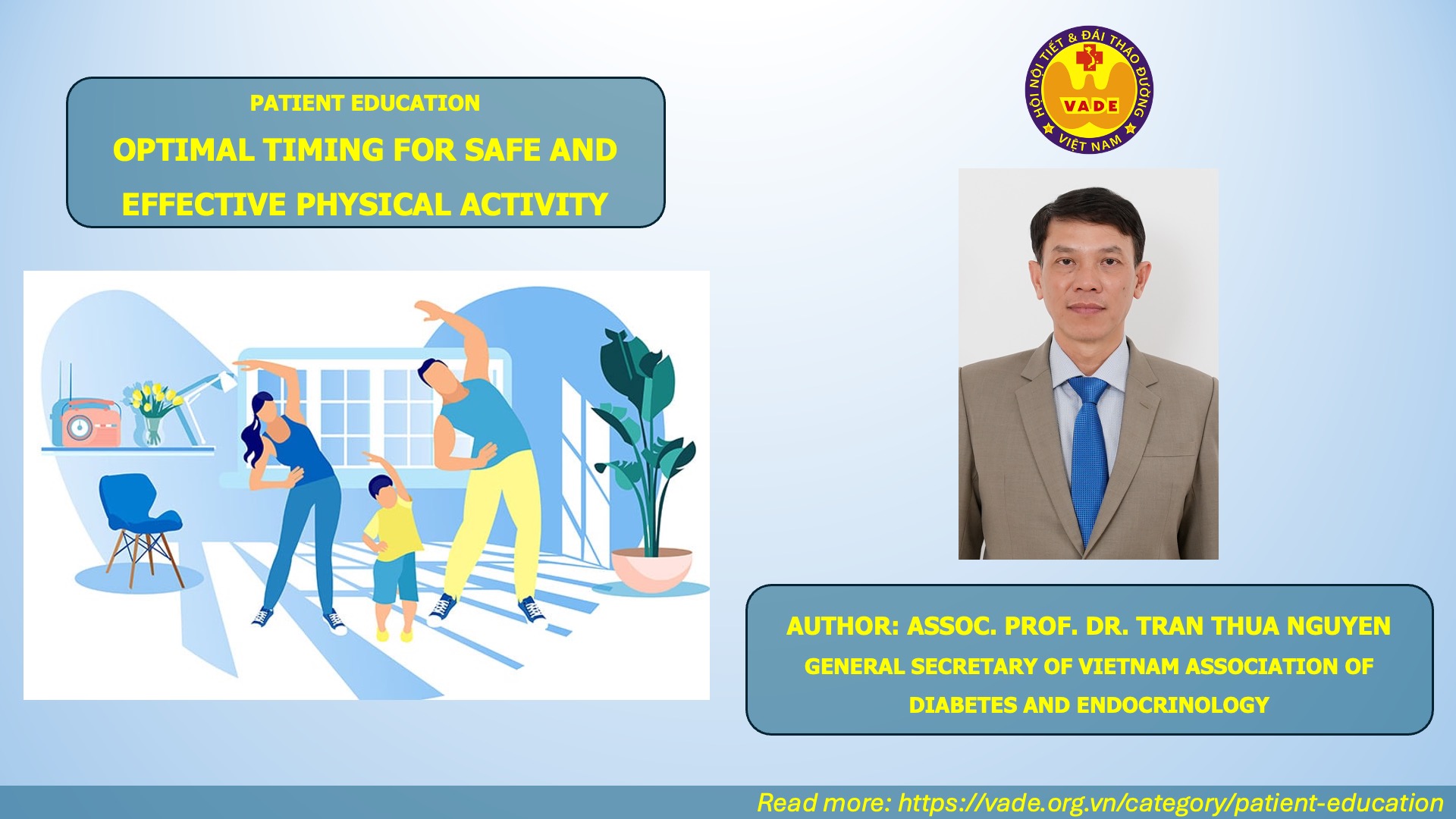
Assoc. Prof. Dr. Tran Thua Nguyen
1. Definitions:
Exercise is a planned physical activity (walking, jogging, cycling, tai chi, etc.) that helps improve health and control blood glucose levels in people with diabetes.
Exercise Timing refers to the specific time of day a patient chooses to work out (before meals, after meals, early morning, evening, etc.). Selecting the appropriate time is crucial for:
- Better blood glucose control
- Avoiding hypoglycemia (low blood sugar) or excessive hyperglycemia (high blood sugar)
- Enhancing treatment effectiveness
How to identify the right time to exercise:
- Pre-exercise blood glucose is within a safe range (typically 5.5 – 13.9 mmol/L)
- No symptoms of fatigue, dizziness, or intense hunger
- No fever, infection, or acute complications
2. Risks of Improper Timing
If exercise is poorly timed or not well-monitored, patients may face the following risks:
2.1. Hypoglycemia
- Occurs when exercising while fasting, during prolonged workouts, or after taking medication/insulin
- Symptoms: tremors, sweating, dizziness, hunger, confusion
2.2. Hyperglycemia
- Can occur when exercising while blood glucose is too high (> 14 mmol/L)
- Especially dangerous if ketones are present (risk of ketoacidosis)
2.3. Cardiovascular Complications
- Sudden intense exertion in elderly patients or those with pre-existing heart conditions
2.4. Injuries and Foot Complications
- Caused by wearing inappropriate footwear or exercising with existing foot ulcers
3. Selection and Proper Management
3.1. Recommended Exercise Timing
✔ 1–2 hours after a meal (Best):
- Helps reduce postprandial (after-meal) blood glucose
- Suitable for most patients
✔ Morning (after a light snack):
- Helps jumpstart the body and stabilize blood glucose throughout the day
✔ Afternoon:
- Suitable for those unable to exercise in the morning
❌ Avoid exercising when:
- Completely fasting
- Blood glucose is < 5.5 mmol/L
- Blood glucose is > 14 mmol/L (especially if ketones are present)
3.2. Monitoring Before – During – After Exercise
Before exercise:
- Measure blood glucose
- If < 5.5 mmol/L → have a light snack before starting
- If > 14 mmol/L → postpone the session
During exercise:
- Carry water and a source of sugar (candies/glucose tabs)
- Monitor for any abnormal symptoms
After exercise:
- Re-check blood glucose levels
- Have a meal if necessary
3.3. Handling Situations During Exercise
Hypoglycemia during exercise
- Stop exercising immediately
- Consume 15g of fast-acting carbohydrates (sugar water, soda, etc.)
- Rest and monitor symptoms
Fatigue, chest pain, or shortness of breath
- Stop exercising
- Rest and seek medical attention immediately
3.4. Principles of Safe Training
- Exercise regularly (≥ 150 minutes/week)
- Increase intensity gradually; do not overexert
- Wear proper footwear; inspect feet before and after exercise
- Stay hydrated
- Consult a doctor before starting any new exercise program
4. When to See a Doctor?
- Severe or recurrent hypoglycemia
- Chest pain or shortness of breath during exercise
- Persistently high blood glucose after exercise
- New foot complications or injuries
5. Key Message
- Exercise is “medicine without pills” that helps manage diabetes
- Choosing the right time increases effectiveness and reduces risks
- Always monitor your blood glucose and listen to your body
References
- American Diabetes Association (ADA). Standards of Medical Care in Diabetes 2025.
- Ministry of Health of Vietnam. Guidelines for Diagnosis and Treatment of Type 2 Diabetes.
- International Diabetes Federation (IDF). Global Guideline for Type 2 Diabetes.